THE ORIGIN
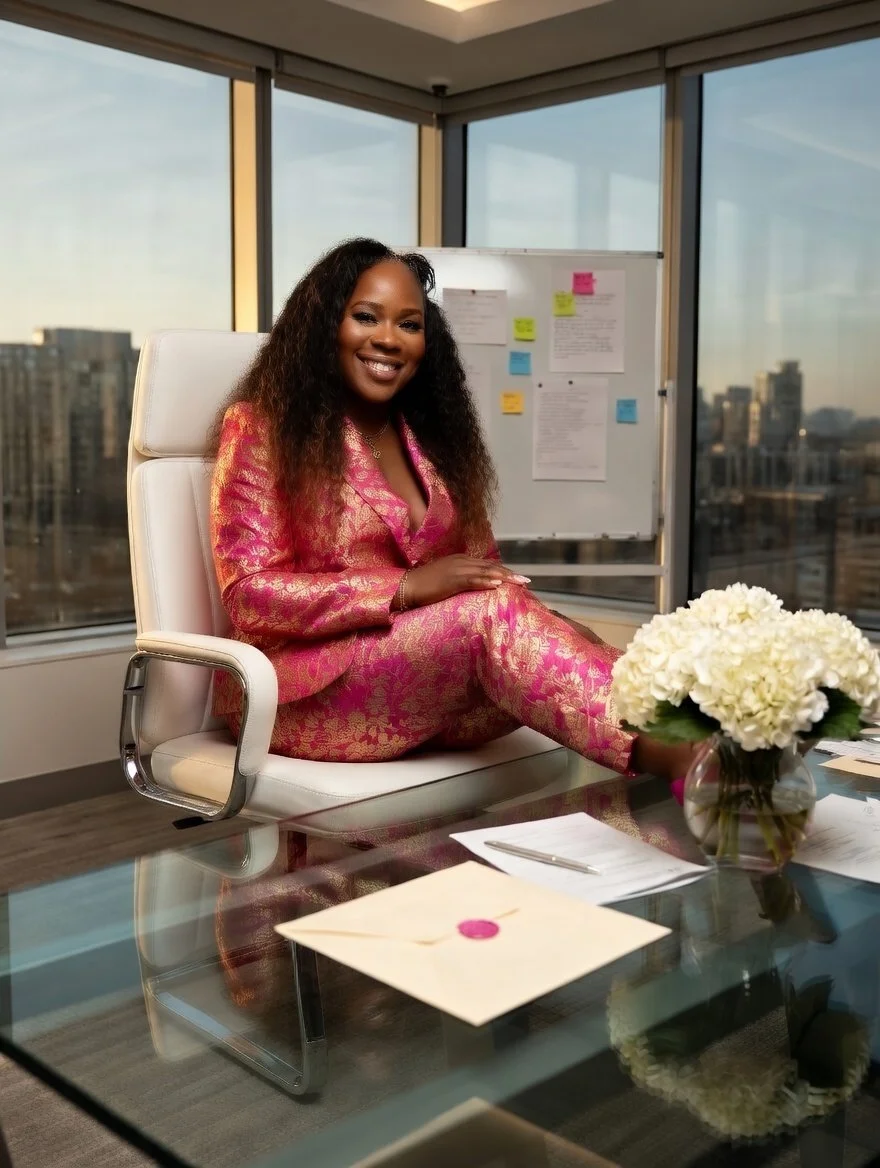
A note from Crystal Green Kelly, Chief Experience Intelligence Officer & Founder
———
I was maybe 26.
I drove myself from Tallahassee to Boca Raton for what I understood to be a Women’s Leadership Summit. What I know now, with twenty years of industry experience behind me, is that it was a FAM (familiarization) trip — a hotel hosting a small group of women, packaging access as retreat, selling a property by letting us feel it. I didn’t know that then. I just knew I had been invited somewhere I had never been, by people who seemed to believe I belonged there.
I don’t remember the drive. I don’t remember parking. What I remember is the moment the car stopped and someone was already there. Already moving toward me. Already knowing my name before I had said it.
That was the first thing that told me this place was different.
I was given a welcome beverage. My key. And time — unhurried, unscheduled, mine — before the evening’s reception. I didn’t know a single person in that hotel. And somehow I didn’t feel alone for a single moment of the next two and a half days.
———
What followed was the kind of experience I didn’t yet have language for.
Yoga on the lawn in the morning. Not announced with fanfare — just there, ready, waiting for whoever showed up. And then a smoothie station with what had to be thirty ingredients and a person behind it who could tell you exactly what each one would do for your body. Berries for blood sugar. Chia for protein and fullness. They weren’t selling you a smoothie. They were paying attention to you. That’s different.
Custom water bottles. Breakfast outside — a full chef-prepared spread that felt less like a meal and more like a reminder that mornings don’t have to be rushed. A group of women in robes in the spa, sitting around talking before our treatments the way women do when nobody is performing for anyone. Endless champagne afterwards. A yacht on the water where someone was pointing out the houses of people whose names I recognized, and I was sitting there thinking two things at the same time:
“This is extraordinary. And my company could never afford to book this.”
That second thought didn’t make me feel small. It made me feel something sharper. More specific. I said it out loud — not to anyone in particular, just into the air, the way you say things when you’re making a promise to yourself:
“I have to come back. I don’t know how yet. But I have to book something here one day.”
I mailed Tessa — my host, my sales contact, the woman who had orchestrated all of it with a grace that made the whole thing look effortless — a thank you card. A real one. With a stamp. Because that’s what the experience warranted. And I told her in that card: I’m going to book you one day. It may not be here. But I’m going to get myself up the chain until I can land somewhere and book you.
I meant it.
———
What I didn’t know then was that I was already being educated.
Not in a classroom. Not in a training. In a room. By the way a property chose to treat a 26-year-old woman from Queens who had driven herself down from Tallahassee and didn’t know a soul. They didn’t know what I would become. They just decided that whoever I was, I deserved to be welcomed like I belonged.
That decision changed everything.
———
It didn’t start at the Waldorf Boca Raton. If I’m honest, it started much earlier.
I was 16 when I started working at a small legal printing organization. My boss there — the kind of leader you spend the rest of your career measuring others against — handed me the company credit card and sent me Christmas shopping for families her organization had adopted for the season. Eight of us total in that office. She trusted a teenager to go get what those families needed and wanted. Not what was budget-appropriate. What they actually needed. I didn’t understand then that she was teaching me something about the relationship between resources and dignity. That when you have the ability to provide something meaningful, you do it with full commitment, not halfway.
She had a cabin in the woods. Before Airbnb existed, before the phrase “experience economy” had been coined, she made it available to her small staff — rent-free, year-round, one group at a time. A week away, given freely, because she understood that rest is a form of respect.
And then there was my mother. She had worked for one of the top law firms in New York City, and what she brought home from that world — without ever making it a lesson — was a standard. Flowers and chocolates and gestures that said “you matter” in a language that required no translation. Appreciation at a level most people never witness up close. That standard lived in our home before I had words for it. I carried it into every room I ever walked into.
And then there was my father. Blue collar. Queens. A man who wound up as one of the foremen on the cleanup crew at Ground Zero after September 11th — who spent months in that wreckage doing the work that needed to be done, quietly, without anyone handing him an award for it. He was not a man of luxury. He was a man of dignity. And he taught me, without ever saying it directly, that the world should show up for you — not because of what you have, but because of who you are.
Hot dogs and pizza. Summers in Queens. And somehow, alongside all of it, rooms that raised my standard before I knew I had one.
———
I have been to Barcelona and Milan and Copenhagen and Amsterdam. I have walked the streets of Edinburgh and Dublin and Zurich. I have snowshoed in Aspen with a guide named Freddie who changed what I thought a work trip could feel like. I have sat in a spa in Montreal with a migraine and had someone bring me electrolytes without being asked. I have floated in the Caribbean off the coast of Panama and watched a Guna woman weave red, yellow, and black thread onto my wrist without a word exchanged between us and understood every single thing she was saying.
Every one of those experiences lives in me. Every one of them raised the floor.
And every time I walk into a room now — any room, any event, any convening — I am measuring it against all of them. Not to judge. To understand. To see what’s working, what’s been designed with intention, and what’s been produced without it. To notice the difference between a space that was built to impress and a space that was built to receive.
That difference is almost always invisible to the people inside it.
It was never invisible to me.
———
I built House of Kelly because I believe that every person in every room deserves to feel what I felt in Boca Raton at 26. Not the champagne. Not the yacht. The feeling of being known before you introduced yourself. Of being welcomed like you already belonged. Of leaving two and a half days later with a standard you didn’t have when you arrived — and the quiet, certain knowledge that you would spend the rest of your life building toward it.
That’s what experience intelligence is.
Not a checklist. Not a rating system. Not a set of best practices.
It’s the thing that happens when someone decides, before you’ve said your name, that you deserve to be treated like you matter.
I’ve spent twenty years learning how to build that for other people.
Our clients have trusted us with their most important rooms. Their highest-value guests. The moments that don’t get second chances. And what we bring to every single one of them is the same thing Tessa taught me in Boca Raton twenty-some years ago — the decision, made before anyone walks through the door, that this person deserves to feel like they belong here.
This is where it started.
———
You found this. That already tells us something.
House of Kelly™ accepts a limited number of engagements each season — field observations, invitation-based experiences, and strategic partnerships that are worth our full attention.
You know where to find us.
✦